Apologise or apologize are two spellings of the same English verb. The main difference is regional spelling preference.
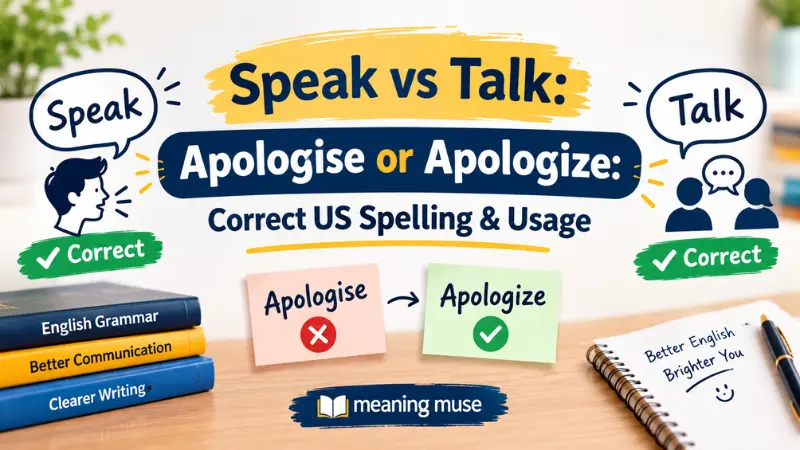
For American English, apologize is the standard choice. British English commonly uses apologise. Both forms mean to say that you are sorry or to express regret for something.
So, if you are writing for a US audience, use apologize.
Quick Answer
Apologize is the preferred spelling in US English.
Apologise is the usual spelling in British English.
The two forms have the same basic meaning and function as verbs. The difference is the spelling of the ending:
- US English: apologize
- British English: apologise
For example:
I apologize for being late.
This is the normal form for American English.
A British writer may instead write:
I apologise for being late.
Neither form changes the basic meaning of the sentence.
Why People Confuse Them
The confusion comes from the final letters -ize and -ise.
American English commonly uses -ize in this word, while British English commonly uses -ise. That creates two familiar forms:
apologize → US spelling
apologise → usual British spelling
The difference is easy to miss because the two words sound essentially the same in ordinary speech. The spelling changes, but the basic pronunciation and meaning do not.
Other forms follow the same regional pattern. For example, American English uses apologized and apologizing, while British usage commonly has apologised and apologising.
Key Differences At A Glance
| Context | Best Choice | Why |
|---|---|---|
| American English | apologize | Standard US spelling |
| British English | apologise | Usual British spelling |
| US business writing | apologize | Fits standard American usage |
| US academic writing | apologize | Consistent with US spelling |
| British writing | apologise | Common British convention |
| A required house style | Follow the style guide | Publications may specify their own spelling system |
The key difference is regional spelling preference, not meaning.
Extra comparison:
- apologize — American English spelling with -ize
- apologise — usual British English spelling with -ise
Are They the Same Word?
Yes. Apologize and apologise are spelling variants of the same verb.
Both mean to express regret, say that you are sorry, or acknowledge a fault or problem.
For example:
I apologize for the delay.
and
I apologise for the delay.
have the same meaning.
The difference is not a difference in grammar or basic meaning. It is mainly a difference in spelling convention.
Pronunciation also does not create a useful distinction for this comparison. The two forms are normally pronounced alike within their respective varieties of English.
US vs UK Preference
In American English, apologize is the normal spelling.
Cambridge identifies apologize as the US form and notes that British English usually uses apologise. Oxford likewise lists apologize as the main entry and identifies apologise as the British form.
British spelling deserves one small qualification: apologise is the usual British form, but apologize is not unknown in British English. Some British publishing systems, including Oxford style, use -ize spellings.
For a US-focused article, however, the practical rule is simple:
Use apologize.
The same distinction appears in related forms:
- US: apologizes
- UK: apologises
- US: apologized
- UK: apologised
- US: apologizing
- UK: apologising
Which Spelling Should You Use?
Use apologize when writing for an American audience.
This applies to everyday messages, school assignments, business writing, websites, reports, and other standard US English contexts.
Examples:
I apologize for the mistake.
We apologize for the inconvenience.
She apologized for arriving late.
The company apologized to its customers.
If you are writing specifically for a British audience, apologise is the usual choice.
The most important point is consistency. If your document follows American spelling, use apologize and its related forms. If it follows a British spelling system, use the corresponding British forms consistently.
When One Spelling Looks Wrong
To an American reader, apologise may look like a spelling mistake because apologize is the normal US form.
For example:
I apologise for the confusion.
An American writer would normally change this to:
I apologize for the confusion.
However, apologise is not simply an incorrect spelling. It is a standard regional variant used especially in British English.
The reverse can happen for a British reader. Apologize may look less familiar because apologise is the usual British spelling.
Therefore, the best way to judge the spelling is to consider the variety of English being used.
Common Mistakes (and Quick Fixes)
Mistake 1: Using the British form in US writing
Less suitable for standard US English:
I apologise for the delay.
US form:
I apologize for the delay.
Mistake 2: Mixing the spelling systems
A document should normally follow one consistent spelling system.
For US English, use:
- apologize
- apologizes
- apologized
- apologizing
Mistake 3: Assuming apologise is always wrong
It is not. Apologise is a standard British spelling of the same verb.
Mistake 4: Assuming apologize is only understood in America
The -ize form is also found in British English, including styles that prefer -ize endings.
Mistake 5: Changing the meaning
Do not treat apologize and apologise as different words with different meanings. The spelling changes, but the basic meaning remains the same.
Everyday Examples
Here are natural examples for US English:
- I apologize for being late.
- We apologize for the inconvenience.
- She apologized to her friend after the argument.
- He apologized for sending the wrong file.
- The manager apologized to the customer.
- I sincerely apologize for the mistake.
- The company apologized for the delay.
- She called to apologize for missing the meeting.
- You should apologize if you hurt someone.
- We apologize for any confusion this may have caused.
For British English, the corresponding base form is apologise.
Dictionary-Style Word Details
Verb
- apologize: A verb meaning to say that you are sorry or to express regret for a fault, mistake, problem, or offense. It is the standard US spelling.
- apologise: The same verb with the usual British -ise spelling.
Both are intransitive verbs. Common patterns include apologize to someone and apologize for something.
Examples:
I apologized to my manager.
She apologized for the mistake.
Noun
- apologize: Not a noun. It is a verb.
- apologise: Not a noun. It is also a verb.
The related noun is apology, but that is a separate word and is not one of the two spellings being compared here.
Synonyms
The two spellings share the same closest plain alternatives because they have the same meaning.
- apologize: say sorry, express regret, ask forgiveness, make an apology
- apologise: say sorry, express regret, ask forgiveness, make an apology
These alternatives depend on the sentence and level of formality.
There is no meaningful synonym difference caused by the -ize versus -ise spelling.
Example Sentences
- apologize: I apologize for the confusion.
- apologise: I apologise for the confusion.
- apologize: She apologized for arriving late.
- apologise: She apologised for arriving late.
The meaning remains the same. The spelling reflects the English variety being followed.
Word History
The verb has roots connected with the Greek word apologia, meaning a speech or defense. Oxford traces the English verb to the late 16th century and explains that it originally had a sense related to making a defensive argument.
The modern spelling difference developed around the competing -ize and -ise conventions. For present-day writers, the important distinction is regional and stylistic rather than a difference in meaning.
Phrases Containing
Common phrases include:
- apologize for the mistake
- apologize for the delay
- apologize to someone
- apologize for being late
- sincerely apologize
- publicly apologize
- formally apologize
- apologize for the inconvenience
In US English, these phrases use apologize.
FAQs
Is it apologize or apologise?
Apologize is the standard spelling in US English. Apologise is the usual spelling in British English. Both words have the same meaning.
Is apologize American or British?
Apologize is the standard American English spelling. British English commonly uses apologise, although apologize can also appear in some British styles.
Is apologise wrong in American English?
Apologise is not an incorrect English word, but it is not the usual US spelling. For American English, apologize is the better choice.
Is apologize correct in British English?
Yes. Apologize can be used in British English, particularly in styles that prefer -ize spellings. However, apologise is more commonly associated with British usage.
Do apologize and apologise mean the same thing?
Yes. Apologize and apologise are spelling variants of the same verb and have the same basic meaning.
How do Americans spell apologize?
Americans normally spell the word apologize, with -ize at the end.
Example:
I apologize for the mistake.
How do Americans spell apologize?
Americans normally spell the word apologize, with -ize at the end.
Example:
I apologize for the mistake.
How do you spell apologize in British English?
The usual British spelling is apologise, with -ise at the end.
Example:
I apologise for the mistake.
Is it apologized or apologised?
For US English, use apologized. In British English, apologised is the usual form.
US: She apologized for the delay.
UK: She apologised for the delay.
Is it apologizing or apologising?
For US English, use apologizing. British English commonly uses apologising.
Which spelling should I use in the US?
Use apologize for standard US English. This spelling is appropriate for American school, business, website, and everyday writing.
Does apologize have a different pronunciation from apologise?
No meaningful pronunciation difference is created by the spelling. The two forms are generally pronounced the same within their respective varieties of English.
What is the noun form of apologize?
The noun form is apology. The words apologize and apologise themselves are verbs.
Is apologize one word?
Yes. Apologize is written as one word. Apologise is also written as one word; the difference is the spelling of the ending.
What is the easiest way to remember apologize vs apologise?
For US English, remember Z = American: apologize. For the usual British spelling, remember S = apologise.
Conclusion
Apologize is the standard spelling for US English, while apologise is the usual British spelling.
Both forms are correct regional spellings of the same verb. They have the same basic meaning, and the main difference is the -ize versus -ise ending.
If your audience is American, choose apologize:
I apologize for the mistake.
If you are following standard British spelling, apologise is the usual choice:
I apologise for the mistake.
For a US-focused website, school paper, business document, or general American English content, apologize is the clear choice.