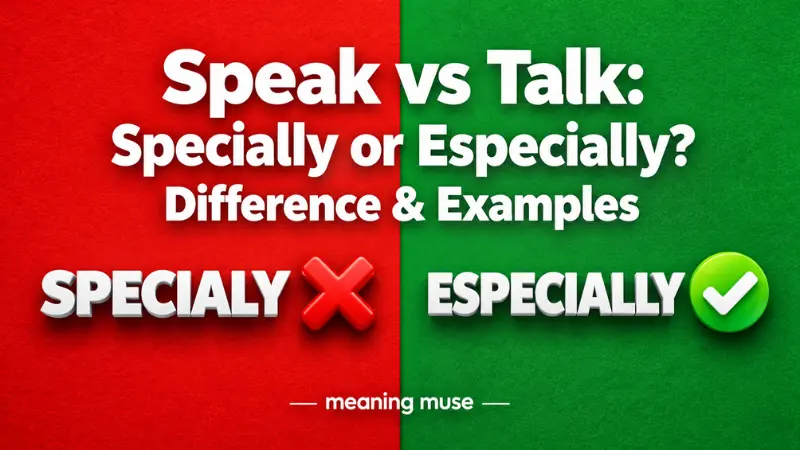
Choosing between specially or especially can be confusing because the words look alike and sometimes have similar meanings. Both are correct English words, but they are not always used in the same way.
The easiest rule is simple: use especially when you mean particularly, above all, or more than others. Use specially when you mean for a special purpose, reason, or person.
For example:
“I especially like chocolate cake” means you like chocolate cake more than other cakes.
“This cake was specially made for you” means someone made the cake for a particular person or purpose.
Once you understand this small difference, choosing the right word becomes much easier.
Quick Answer
Especially usually means particularly or more than others.
Specially usually means for a special purpose or person.
For example, “I especially enjoy summer” means you enjoy summer more than other seasons. “These shoes were specially designed for runners” means the shoes were made for a particular purpose.
When you are unsure, ask yourself whether you mean particularly or for a special purpose. That question will often give you the correct answer.
Specially vs Especially at a Glance
| Context | Best Choice | Why |
|---|---|---|
| Something stands out from others | Especially | Means particularly or more than others |
| Something has a special purpose | Specially | Shows that it was made or done for a certain reason |
| Something is meant for one person | Specially | Shows a particular person was in mind |
| Emphasizing a quality | Especially | Means unusually or to a greater degree |
| Naming one important example | Especially | Highlights one thing from a larger group |
A quick memory trick is:
Especially = particularly
Specially = for a special purpose
What Does Especially Mean?
Especially is an adverb. It is used when one person, thing, quality, or situation deserves more attention than others.
It often has a meaning close to particularly.
Consider this sentence:
“I love fruit, especially strawberries.”
The speaker likes fruit in general, but strawberries stand out.
Another example is:
“The road is especially busy in the morning.”
Here, especially tells us that the road is busier than usual during the morning.
You can also use especially before an adjective.
“The test was especially difficult.”
This means the test was unusually difficult or more difficult than expected.
In everyday American English, especially is common when a writer wants to highlight one thing from a larger group.
What Does Specially Mean?
Specially is also an adverb.
It usually describes something that is done, created, changed, chosen, or prepared for a particular purpose.
For example:
“The room was specially designed for young children.”
The room has a specific purpose. Its design meets the needs of children.
Another example is:
“I made this dinner specially for you.”
The dinner was prepared with one particular person in mind.
You may also see phrases such as:
“specially trained workers”
“specially designed equipment”
“specially prepared meals”
“specially made clothing”
In each case, there is a clear special purpose, need, or person.
What Is the Difference Between Specially and Especially?
The main difference is what you want to emphasize.
Use especially when something is important, noticeable, unusual, or preferred more than something else.
Use specially when something happens for a particular reason or is made for a particular purpose.
Compare these two sentences:
“I especially like this song.”
“This song was specially written for the movie.”
The first sentence talks about preference. The person likes this song more than others.
The second sentence talks about purpose. Someone wrote the song specifically for the movie.
That is the key difference.
Are Specially and Especially the Same Word?
No. They are closely related, but they are separate words.
Both come from the idea of something being special, which is why their meanings can overlap. However, modern English often gives each word a slightly different job.
Especially commonly highlights something.
“The park is beautiful, especially in spring.”
Spring stands out as a particularly beautiful time.
Specially commonly explains why something was done.
“The garden was specially built for children.”
The garden has a particular purpose.
In some sentences, both words may sound possible. However, choosing the word that matches your intended meaning usually makes the sentence clearer.
Specially or Especially in American English?
Both words are correct in American English.
The important issue is not whether one belongs to American English and the other belongs to British English. The more useful difference is their meaning in the sentence.
Use especially for ideas such as particularly, above all, or to a greater degree.
Use specially when you mean for a certain person, reason, need, or purpose.
For American readers, especially will usually sound more natural when you are simply emphasizing something.
For example:
“The movie was especially funny.”
“Children are especially excited about the trip.”
“I especially enjoy quiet mornings.”
Use specially when the idea of purpose matters:
“The chair was specially made for him.”
“The team uses specially developed software.”
“She ordered a specially prepared meal.”
Especially Meaning: Particularly or More Than Others
One of the most useful ways to understand especially is to replace it with particularly.
“I especially like dogs.”
“I particularly like dogs.”
Both sentences communicate nearly the same idea.
Try another example:
“Driving can be difficult, especially during heavy rain.”
The sentence points to heavy rain as an important example.
Especially is also useful when one member of a group deserves extra attention.
“Many vegetables are healthy, especially leafy greens.”
The sentence does not say that only leafy greens are healthy. It says they are worth particular attention.
Specially Meaning: For a Particular Purpose
A useful replacement for specially is often for a special purpose or specifically for.
“The bag was specially designed for photographers.”
In simple words:
“The bag was designed specifically for photographers.”
Here is another example:
“The school has specially trained teachers.”
The teachers received training for a particular need or task.
This meaning makes specially common with words such as designed, made, created, prepared, trained, adapted, built, and developed.
Specially Made or Especially Made?
Both forms may appear, but specially made is normally the clearer phrase when something was made for a particular person or purpose.
For example:
“This desk was specially made for the small office.”
The desk was created to meet a particular need.
Now compare:
“The dessert was especially well made.”
Here, especially does not describe the purpose of making the dessert. It emphasizes how well it was made.
So the meaning changes depending on the word you choose.
Specially made focuses on purpose.
Especially well made focuses on quality.
Specially Designed or Especially Designed?
When a product, room, system, or object was designed for a particular purpose, specially designed is a natural choice.
For example:
“The stroller is specially designed for travel.”
This means its design serves a particular need.
You may also see especially designed for in English. Because the meanings can overlap, especially can sometimes carry the idea of a particular purpose too.
Still, if you want to make the idea of special purpose very clear, specially designed is a simple and useful choice.
Specially for You or Especially for You?
This pair can be confusing because both expressions are possible.
Specially for you strongly suggests that something was done or made with one person in mind.
“I baked this cake specially for you.”
The cake was prepared for that person.
Especially for you can also express special attention to a person.
“I chose this gift especially for you.”
In everyday speech, especially is common in this kind of sentence too.
The difference is small here. If you want to stress the purpose or preparation, specially works well. If you want to stress that one person receives special attention, especially can sound natural.
Why People Confuse Specially and Especially
The confusion is easy to understand.
Both words come from the same general idea of something being special. They also look almost the same, and their meanings sometimes overlap.
The first part of especially may also be hard to hear clearly in fast speech. As a result, learners may write specially when they mean especially.
The best way to avoid mistakes is not to focus only on spelling.
Focus on meaning.
If you can replace the word with particularly, choose especially.
If you can replace it with for a special purpose, choose specially.
Specially and Especially Pronunciation
The words sound similar, but they do not begin exactly the same way.
Especially is commonly pronounced like “ih-SPESH-uh-lee.”
Specially is commonly pronounced like “SPESH-uh-lee.”
Especially has an extra beginning sound. Specially starts directly with the sound found in special.
Knowing this difference can help with both speaking and spelling.
Part of Speech
Both specially and especially are adverbs.
An adverb can describe or add information to a verb, adjective, another adverb, or a whole idea.
In this sentence:
“The equipment was specially developed for hospitals.”
Specially tells us how and why the equipment was developed.
In this sentence:
“The equipment is especially useful in small hospitals.”
Especially strengthens the adjective useful.
This grammatical difference in the sentences also helps show how the words are commonly used.
Common Mistakes With Specially and Especially
A common mistake is using specially when the writer simply means particularly.
Less natural:
“I specially like winter.”
Better:
“I especially like winter.”
The speaker is talking about preference, not a special purpose.
Another mistake is choosing especially when the main point is why something was created.
Less clear:
“The machine was especially built for this job.”
Clearer:
“The machine was specially built for this job.”
The machine was built for a specific purpose.
However, English usage is not always completely fixed. Sometimes especially can be used where specially might also work. The goal is to choose the word that expresses your meaning most clearly.
Everyday Examples of Especially
“My sister especially likes mystery books.”
“This area gets crowded, especially on weekends.”
“The soup tastes especially good today.”
“Exercise is important, especially as we get older.”
“I was especially happy to see my old friend.”
“The store is busy, especially after work.”
“This lesson is especially helpful for beginners.”
“The beach is beautiful, especially at sunset.”
In all these examples, especially highlights something as more important, noticeable, or true than other possibilities.
Everyday Examples of Specially
“This coat was specially made for cold weather.”
“The dog was specially trained to help its owner.”
“We ordered a specially prepared meal.”
“The computer was specially built for gaming.”
“She came specially to see her grandmother.”
“The program was specially developed for young students.”
“They use specially designed tools for the job.”
“The room was specially adapted for wheelchair users.”
These examples connect specially with a particular purpose, need, or person.
Especially vs Specially: Sentence Comparison
Consider this pair:
“The book is especially useful for new students.”
The book is particularly useful for new students.
“The book was specially written for new students.”
The author wrote the book with new students as the intended audience.
Now compare:
“I especially enjoyed the dinner.”
You enjoyed the dinner a lot or more than other parts of the event.
“The dinner was specially prepared for us.”
Someone prepared it with your group in mind.
These examples show why understanding the intended meaning matters more than memorizing spelling alone.
Synonyms for Especially
Depending on the sentence, words close in meaning to especially include particularly, notably, mainly, chiefly, and above all.
For example:
“I especially enjoyed the last chapter.”
“I particularly enjoyed the last chapter.”
The meaning stays very close.
However, synonyms are not always perfect replacements. The best word depends on the sentence.
Synonyms for Specially
Depending on the context, useful alternatives for specially include specifically, particularly, purposely, and expressly.
For example:
“The device was specially developed for children.”
“The device was specifically developed for children.”
These sentences have nearly the same practical meaning.
Is Specially a Correct Word?
Yes. Specially is a correct English word.
It is not simply a misspelling of especially.
Use specially when something is done for a particular purpose, need, or person.
For example:
“These glasses were specially made for her.”
The word tells us why or for whom the glasses were made.
Is Especially a Correct Word?
Yes. Especially is also correct.
It is very useful when you want to highlight one person, thing, condition, or example.
For example:
“I like animals, especially dogs.”
Dogs receive extra emphasis because the speaker likes them in particular.
Specially or Especially: Easy Memory Trick
Use this simple test.
If particularly makes sense, choose especially.
“I particularly like this restaurant.”
“I especially like this restaurant.”
If for a special purpose makes sense, choose specially.
“This tool was made for a special purpose.”
“This tool was specially made.”
This quick check works in many everyday sentences.
Which One Should You Use?
Choose especially when you are highlighting something.
Choose specially when you are talking about a special purpose.
Write:
“I especially love chocolate.”
But write:
“This chocolate was specially made for the wedding.”
Write:
“Be especially careful near the stairs.”
But write:
“The stairs were specially designed for the building.”
The meaning of the sentence should guide your choice.
FAQs
What is the main difference between specially and especially?
Especially usually means particularly, above all, or more than others. Specially usually means for a particular purpose, reason, need, or person.
Is it specially for you or especially for you?
Both can be correct. Specially for you strongly suggests something was done or prepared for that person, while especially for you can emphasize that the person is receiving particular attention.
Is specially a wrong spelling of especially?
No. Specially is a real word. It usually appears when something is done or created for a particular purpose.
Should I say “I specially like it” or “I especially like it”?
In standard everyday American English, “I especially like it” is the clearer choice when you mean “I particularly like it.”
Is it specially designed or especially designed?
Both forms can occur, but specially designed clearly communicates that something was designed for a particular purpose or need.
Can specially and especially be used interchangeably?
Sometimes their meanings overlap, so both may be possible. However, they are not interchangeable in every sentence. Especially usually highlights something, while specially usually points to purpose.
What is another word for especially?
Particularly is often the easiest replacement. Depending on context, notably, mainly, chiefly, or above all may also work.
Conclusion
The choice between specially or especially becomes simple when you focus on meaning.
Use especially when you mean particularly, above all, or more than others. For example, “I especially enjoy reading at night.”
Use specially when something is done or made for a particular purpose or person. For example, “The lamp was specially designed for reading.”
Both words are correct. They simply do different jobs in many sentences.
Remember the easiest rule: especially = particularly, while specially = for a special purpose. That simple test will help you choose the right word in most everyday writing.