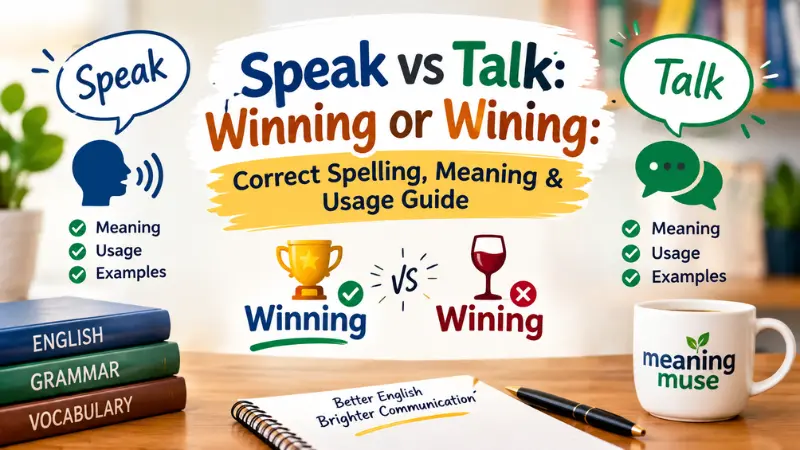
Winning or wining? Both are real English words, but they do not mean the same thing.
Winning comes from the verb win. It relates to success, victory, or gaining an advantage. It can also describe someone or something that is attractive or pleasing.
Wining comes from the verb wine. It can mean providing or drinking wine and appears especially in expressions such as wining and dining.
For most everyday US writing, winning is the word you need when you mean success or victory.
Quick Answer
Use winning when you mean success, victory, or being the winner.
The team is winning the game.
Use wining when you mean something related to serving or drinking wine.
They were wining and dining their guests.
The easiest memory trick is:
Winning = win
Wining = wine
So if your sentence is about a contest, game, goal, or success, choose winning.
If it is about wine or wine-related hospitality, wining may be correct.
Why People Confuse Them
The two words look almost the same. They both end in -ing, and the only visible difference is the extra n in winning.
The confusion becomes stronger because wining is a real word. A spell-checker may not always treat it as a simple spelling error.
The two words also come from different base words:
- winning → win
- wining → wine
That one extra letter changes the meaning.
Compare these sentences:
She is winning the race.
The restaurant is wining its guests.
The first sentence is about victory. The second is about wine-related hospitality.
Key Differences At A Glance
| Context | Best Choice | Why |
|---|---|---|
| Winning a game | winning | It comes from win. |
| Winning a competition | winning | It describes success or victory. |
| A winning team | winning | The team has won or is successful. |
| A winning strategy | winning | The strategy leads to success. |
| A winning smile | winning | It means attractive or charming. |
| Serving guests with wine | wining | It comes from wine. |
| Drinking wine | wining | It is an -ing form of wine. |
| Wining and dining | wining | The phrase refers to wine and dining. |
The One-Letter Memory Trick
Think of the base word:
- WIN + ing = WINNING
- WINE + ing = WINING
This makes the spelling much easier to remember.
If you mean win, keep both n letters.
If you mean wine, remove the final e and add -ing:
wine → wining
Are They the Same Word?
No. Winning and wining are not spelling variants of the same word.
They are forms of two different verbs.
Winning is related to win. It can refer to gaining victory or success. It can also describe something attractive or effective, such as a winning smile or winning strategy.
Wining is related to wine. Dictionaries list wining as the present participle of wine. The verb wine can mean to provide or drink wine.
So this is a commonly confused-word pair, not a US-versus-UK spelling pair.
US vs UK Preference
There is no major US-versus-UK spelling difference between winning and wining.
The same basic distinction applies in both varieties of English:
- winning relates to win
- wining relates to wine
The important difference is usage, not regional spelling.
In American English, winning is extremely common in everyday contexts such as sports, contests, business, and personal success. Dictionaries also recognize wining, but its use is much more specialized.
For a US audience, do not replace winning with wining simply because the shorter spelling looks possible.
Which Spelling Should You Use?
Use winning in most situations involving success or victory.
Examples include:
- winning a game
- winning a race
- winning an award
- winning a contest
- winning a contract
- winning an argument
- winning the championship
- winning a customer
Use wining only when the sentence comes from the verb wine.
Examples include:
- wining and dining guests
- wining clients
- wining visitors
- wining and dining potential customers
The meaning of your sentence should decide the spelling.
When One Spelling Looks Wrong
Wining can look wrong because most people see winning far more often.
For example:
She is wining the championship.
This is wrong if you mean she is succeeding in the championship.
The correct sentence is:
She is winning the championship.
But wining can be correct in a wine-related sentence:
The company was wining and dining its guests.
Here, wining comes from wine, so the spelling is appropriate. Major dictionaries document this verb form.
The important question is not “Which word looks more normal?”
Ask:
Does the sentence come from win or wine?
Common Mistakes (and Quick Fixes)
Mistake 1: Writing “wining” for victory
❌ Our team is wining the game.
✅ Our team is winning the game.
Fix: Victory comes from win → winning.
Mistake 2: Writing “winning and dining”
❌ They spent the evening winning and dining their clients.
✅ They spent the evening wining and dining their clients.
Fix: The phrase uses wine → wining.
Mistake 3: Thinking “wining” is always wrong
❌ “Wining” is never a real English word.
✅ Wining is a real word, but it has a specific wine-related use.
Fix: Check the base word before correcting it.
Mistake 4: Forgetting the second “n”
❌ She is wining the race.
✅ She is winning the race.
Fix: Remember win + ing = winning.
Mistake 5: Confusing wine with win
❌ The company was winning and dining its visitors.
✅ The company was wining and dining its visitors.
Fix: Wine-related hospitality uses wining.
Everyday Examples
Examples with Winning
Our team is winning by two points.
She is winning the spelling contest.
The company has a winning strategy.
He received the award for the winning design.
The runner made a winning move near the finish line.
Her winning smile made everyone feel welcome.
These uses match the common meanings of winning as successful, victorious, or attractive.
Examples with Wining
The restaurant was wining and dining its guests.
They spent the evening wining and dining potential clients.
The hotel became known for wining visitors during special events.
The hosts were wining their guests before dinner.
These uses are connected to the verb wine.
Compare the Meaning
The team is winning the match.
This means the team is succeeding.
The company is wining its clients.
This means the company is entertaining them with wine.
The spelling changes because the base verbs change.
Dictionary-Style Word Details
Verb
- Winning: the present participle of win. It can describe the act of succeeding or being victorious.
- Wining: the present participle of wine. The verb can mean providing wine or drinking wine.
Noun
- Winning: can also function as a noun in certain uses, including the act of winning. Dictionary.com also records noun uses related to something won.
- Wining: is not normally used as an everyday US noun. A specialized noun use exists for a session of drinking wine socially, but this is uncommon.
Synonyms
The closest plain alternatives depend on the word’s meaning.
Winning:
- succeeding
- victorious
- triumphing
- successful
When winning means charming, suitable alternatives can include:
- appealing
- charming
- engaging
Wining:
- drinking wine
- serving wine
- entertaining with wine
These are descriptions of the action rather than exact replacements in every sentence.
Example Sentences
Winning:
The home team is winning the game.
Her winning personality helped her connect with customers.
They celebrated after winning the championship.
Wining:
The hosts were wining and dining their visitors.
The company spent the evening wining potential clients.
They enjoyed wining and dining at the restaurant.
Word History
The two words have separate histories because they come from different base words.
Winning comes from win. Modern dictionaries connect its meanings with success, victory, and related uses.
Wining comes from wine. The word wine has a much older history and is ultimately connected with Latin vīnum.
The spelling difference is therefore not a regional spelling change. It reflects two different words.
Phrases Containing
Common phrases with winning include:
- winning team
- winning streak
- winning goal
- winning strategy
- winning combination
- winning smile
- winning entry
Common phrases with wining include:
- wining and dining
- wining and dining guests
- wining and dining clients
The phrase “wining and dining” is especially useful because it clearly shows the connection between wining and wine.
FAQs
Is it winning or wining?
Both winning and wining are real words, but they have different meanings. Winning relates to success or victory, while wining relates to wine.
What is the difference between winning and wining?
Winning comes from win and means succeeding or being victorious. Wining comes from wine and refers to drinking, serving, or entertaining with wine.
Is “wining” a correct word?
Yes. Wining is a correct but less common word. It is the -ing form of wine and is often seen in the phrase “wining and dining.”
Is “winning” the correct spelling for success?
Yes. When you mean success, victory, or achievement, the correct spelling is winning.
Example: Our team is winning the game.
Is “wining and dining” correct?
Yes. Wining and dining is a correct expression. It refers to entertaining someone with food and wine.
Why does winning have two n’s?
Winning comes from win. When the verb ends in a single consonant preceded by a short vowel, the final consonant is doubled before -ing: win → winning.
Why is wine spelled wining with one n?
Wining comes from wine. The final e is removed before adding -ing: wine → wining.
Is wining a misspelling of winning?
Not always. Wining can be a legitimate word when it comes from wine. However, if you mean success or victory, wining is incorrect and winning is the right choice.
Which is correct: “winning the game” or “wining the game”?
The correct phrase is “winning the game.”
Example: The team is winning the game.
Which is correct: “winning and dining” or “wining and dining”?
The correct expression is “wining and dining.” Here, wining comes from wine.
Is winning American or British English?
Winning is standard in both American and British English. There is no US-versus-UK spelling difference for this word.
Is wining American or British English?
Wining is also an English word used according to its meaning. It is not simply a British spelling of winning.
What is an easy way to remember winning vs wining?
WIN → WINNING = success or victory
WINE → WINING = wine-related activity
Can winning and wining be used interchangeably?
No. They have different meanings and come from different verbs. Use winning for win and wining for wine.
What is the most common spelling: winning or wining?
Winning is much more common in everyday writing because success, victory, and related uses are common. Wining has a narrower wine-related use.
What is the correct spelling for “winning team”?
The correct spelling is winning team.
Example: The winning team received the championship trophy.
What is the correct spelling for “wining clients”?
Wining clients can be correct when it means entertaining clients with wine. However, winning clients has a completely different meaning: successfully gaining or attracting clients.
Conclusion
Winning and wining are both legitimate English forms, but they have different meanings.
Use winning when you mean success, victory, or achievement:
She is winning the race.
Use wining when you mean an action related to wine, especially in wining and dining:
They were wining and dining their guests.
For everyday American English, winning is the form you will need in most situations involving success or victory.
Remember this simple rule: