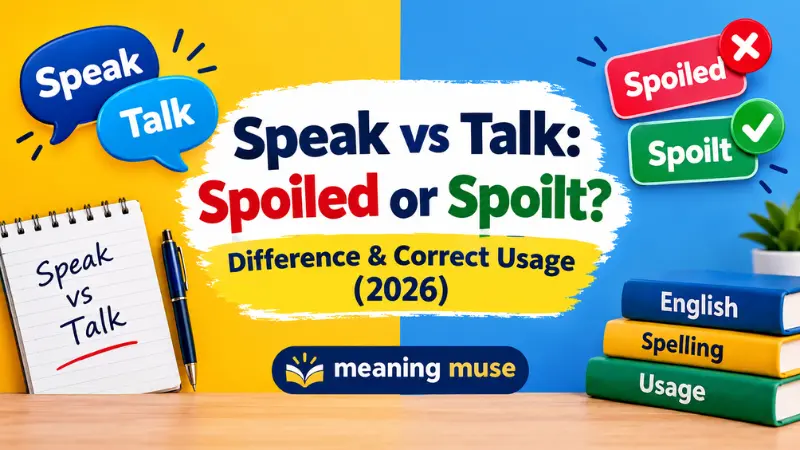
Many English learners wonder whether they should write spoiled or spoilt.
The good news is that both spellings are correct. They are different past forms of the verb spoil, and they have the same basic meanings. The main difference is regional preference.
In American English, spoiled is the standard and most common choice.
In British English, spoilt is also widely used, especially in some adjective and past participle uses.
Examples:
- The food was spoiled in the refrigerator. (American English)
- The food was spoilt in the refrigerator. (British English)
Both sentences have the same meaning.
Quick Answer
Spoiled and spoilt are both correct forms of the verb spoil.
For a US audience, use spoiled because it is the normal American English spelling.
Use spoilt mainly when writing in British English or following a style that prefers it.
Examples:
- The milk spoiled overnight.
- The child was spoilt by too many gifts.
The meaning does not change. The main difference is the English variety you are using.
Why People Confuse Them
The confusion happens because English has many verbs with more than one past form.
Some verbs follow the regular -ed pattern:
- play → played
- walk → walked
- spoil → spoiled
Other forms keep older patterns:
- sleep → slept
- keep → kept
- spoil → spoilt
Because spoilt looks similar to older irregular forms, many writers wonder if it is more correct. However, both forms are accepted depending on regional usage.
Key Differences At A Glance
| Context | Best Choice | Why |
|---|---|---|
| American English writing | Spoiled | Standard US form |
| British English writing | Spoilt or Spoiled | Both can appear |
| Professional US documents | Spoiled | Matches American conventions |
| Talking about damaged food | Spoiled / Spoilt | Same meaning |
| Describing an overindulged child | Spoiled / Spoilt | Same meaning |
Feature Comparison
| Feature | Spoiled | Spoilt |
|---|---|---|
| Meaning | Same as spoilt | Same as spoiled |
| Region | More common in US English | More common in British English |
| Grammar | Past tense and past participle of spoil | Past tense and past participle of spoil |
| Correctness | Correct | Correct |
Are They the Same Word?
Yes. Spoiled and spoilt come from the same verb: spoil.
They can describe:
- something damaged
- food that is no longer good
- something ruined
- a person treated with too much kindness or attention
Examples:
The rain spoiled our picnic.
The rain spoilt our picnic.
Both sentences mean the rain ruined the picnic.
The spelling choice depends mainly on regional English.
US vs UK Preference
The biggest difference is location.
American English
American writers usually use:
spoiled
Examples:
The milk was spoiled.
The surprise was spoiled.
He was a spoiled child.
For US readers, spoiled is the natural choice.
British English
British writers often use:
spoilt
Examples:
The milk was spoilt.
She was a spoilt child.
However, British English also accepts spoiled in many situations.
The difference is a preference, not a difference in meaning.
Which Spelling Should You Use?
If you are writing for an American audience, choose:
Spoiled
Use it in:
- school writing
- business emails
- websites
- professional documents
- everyday communication
Examples:
The food was spoiled because it was left outside.
The child was spoiled by his grandparents.
The movie ending was spoiled by a review.
If your audience uses British English, spoilt may sound more natural.
When One Spelling Looks Wrong
For American readers, spoilt may look unusual because it is less common in US English.
Example:
The child was spoilt.
A British reader may find this completely normal.
An American reader may expect:
The child was spoiled.
The spelling is not wrong. It simply belongs to a different regional style.
Common Mistakes (and Quick Fixes)
Mistake 1: Thinking spoilt is always incorrect
Wrong idea:
“Only spoiled is correct.”
Better:
Both forms are accepted.
Mistake 2: Mixing regional styles
Example:
Using mostly American spelling but adding British forms randomly can make writing look inconsistent.
Choose one style and stay consistent.
Mistake 3: Thinking the meaning changes
Spoiled and spoilt do not create different meanings.
Compare:
The food was spoiled.
The food was spoilt.
Both mean the food became bad.
Everyday Examples
Using Spoiled
The heat spoiled the food.
The ending of the movie was spoiled.
The child was spoiled by his parents.
The vacation was spoiled by bad weather.
The milk spoiled before we used it.
Using Spoilt
The food was spoilt during the trip.
The child was called a spoilt brat.
The surprise was spoilt by accident.
The view was spoilt by construction.
The plan was spoilt by unexpected problems.
The meaning stays the same.
Dictionary-Style Word Details
Verb
Spoiled:
Spoiled is the past tense and past participle form of spoil in American English.
Examples:
The storm spoiled our plans.
The food has spoiled.
Spoilt:
Spoilt is another past form of spoil, commonly used in British English.
Examples:
The storm spoilt our plans.
The food has spoilt.
Both forms work as verbs.
Noun
Neither spoiled nor spoilt is normally used as a noun.
The related noun is:
spoil
or
spoilage
Examples:
Food spoilage can happen quickly.
The spoil from mining was removed.
Synonyms
The best synonym depends on the meaning.
When something is damaged:
- ruined
- damaged
- destroyed
- harmed
Example:
The rain spoiled the event.
The rain ruined the event.
When someone receives too much attention:
- pampered
- overindulged
- indulged
Example:
A spoiled child.
A pampered child.
Example Sentences
Spoiled
- The heat spoiled the food.
- The announcement spoiled the surprise.
- The child became spoiled after receiving everything he wanted.
- The weather spoiled our outdoor plans.
Spoilt
- The weather spoilt our outdoor plans.
- The child was described as spoilt.
- The holiday was spoilt by heavy rain.
- The milk was spoilt after being left out.
Word History
Both words come from the verb spoil, which has a long history in English.
The difference between spoiled and spoilt developed through different patterns of English verb formation.
The -ed ending became the standard choice in American English, while spoilt remained common in British English.
The two forms continue to exist with the same meaning.
Phrases Containing
Common phrases with spoiled/spoilt include:
- spoiled child
- spoiled food
- spoiled for choice
- spoiled surprise
- spoiled plans
- rotten spoiled child
- spoilt brat
- spoilt for choice
Examples:
The movie was spoiled by a spoiler.
She was spoiled for choice at the store.
Spoiled vs Spoilt for Choice
One common phrase is:
spoiled for choice
and
spoilt for choice
Both mean having many good options.
Example:
Customers are spoiled for choice with so many restaurants.
Customers are spoilt for choice with so many restaurants.
American English usually prefers spoiled for choice.
Spoiled Child vs Spoilt Child
Both phrases describe a child who receives too much attention, too many gifts, or too much freedom.
American English:
He is a spoiled child.
British English:
He is a spoilt child.
The meaning is the same.
Is Spoilt a Correct Word?
Yes.
Spoilt is a correct English word.
It is commonly used in British English as a past form of spoil.
Example:
The food was spoilt.
However, American writers usually choose spoiled.
Is Spoiled a Correct Word?
Yes.
Spoiled is the standard form in American English.
Example:
It can describe damaged things or a person who has been overly indulged.
FAQs
Which is correct, spoiled or spoilt?
Both are correct. Spoiled is preferred in American English, while spoilt is more common in British English.
Do spoiled and spoilt mean the same thing?
Yes. They have the same meanings and are forms of the verb spoil.
Should Americans use spoiled or spoilt?
Americans should generally use spoiled because it is the normal American English form.
Is a spoiled child the same as a spoilt child?
Yes. Both describe a child who has received too much attention, too many gifts, or too much freedom.
Is spoiled food correct?
Yes. Spoiled food means food that has gone bad or is no longer safe or pleasant to eat.
Is spoilt wrong in America?
It is understandable, but it is less common in American English. Most US writers use spoiled.
Conclusion
The choice between spoiled or spoilt depends mainly on regional English.
Both words are correct and have the same meaning.
For American English, use:
Spoiled
For British English, spoilt is also common.
Examples:
The food was spoiled.
The food was spoilt.
Both sentences are correct.
The easiest rule is simple:
Writing for the US? Choose spoiled.
Writing for the UK? Spoilt may be preferred.