SEO Title
Graffiti Art or Vandalism? Understanding the Difference
H1
Graffiti Art or Vandalism: What Is the Difference?
URL Slug
graffiti-art-or-vandalism
Meta Description
Is graffiti art or vandalism? Explore the difference between creative expression and property damage, including permission, legality, public opinion, and examples.
Featured Image Prompt
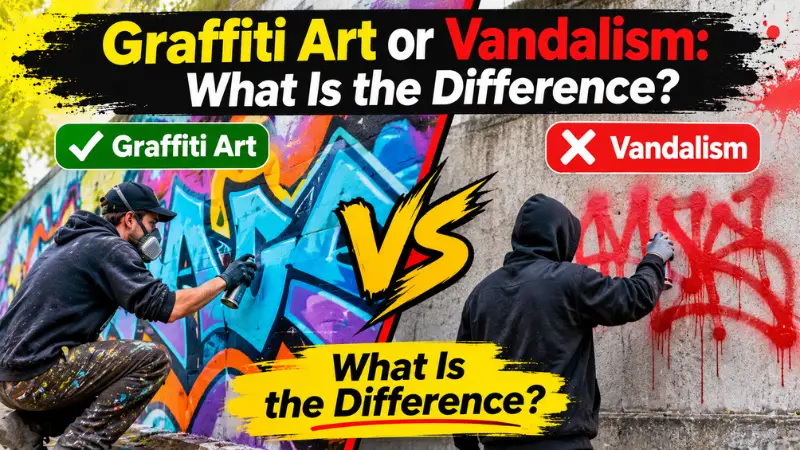
Create a high-quality 800 × 450 editorial photograph showing a colorful, professionally designed graffiti mural on an authorized urban brick wall, with a contrasting example of unauthorized graffiti tagging on a nearby wall. Include spray-paint textures, bold lettering, artistic details, and an authentic American city atmosphere. Realistic photography, balanced composition, natural lighting, no logos, minimal text.
Image Alt Text
Colorful urban graffiti mural illustrating the difference between authorized street art and unauthorized graffiti.
Graffiti Art or Vandalism: What Is the Difference?
Graffiti art or vandalism is a common debate about whether writing, drawing, or painting on public surfaces should be considered creative expression or damage to property. Graffiti can communicate personal identity, cultural experiences, political opinions, and artistic ideas. However, when someone paints or marks property without the owner’s permission, the same activity can become vandalism.
The distinction is not simply about whether the artwork looks beautiful or whether someone considers it meaningful. Permission, property rights, location, and local laws all matter. Understanding these factors helps explain why one colorful wall mural may be celebrated as public art while another spray-painted wall may be treated as property damage.
Quick Answer: Is Graffiti Art or Vandalism?
Graffiti can be both art and vandalism, depending on how and where it is created. When an artist creates graffiti with the property owner’s permission or through an authorized public art project, it can be considered legitimate artwork. When someone marks or defaces another person’s property without permission, it may legally qualify as vandalism, even if the work is visually impressive.
What Is Graffiti Art?
EXTRA BUTTER TEAMS UP WITH GRAFFITI ARTIST CLAW MONEY – MR Magazine
Graffiti art is a form of visual expression that uses lettering, symbols, illustrations, colors, and designs on walls and other surfaces. Artists often use spray paint, markers, stencils, and other materials to create their work.
Unlike ordinary writing, graffiti art can involve detailed artistic techniques and carefully planned compositions. Some artists use it to express their identity, share social messages, represent their communities, or transform ordinary urban spaces.
Common characteristics of graffiti art include:
- Creative expression: Artists communicate thoughts, feelings, and experiences through visual designs.
- Unique lettering: Different lettering styles, including bubble letters and elaborate calligraphy, create recognizable artistic identities.
- Color and design: Artists combine colors, shapes, shadows, and patterns to produce visual effects.
- Cultural identity: Graffiti can represent neighborhood history, music, community values, and cultural movements.
- Social commentary: Some works address inequality, politics, environmental concerns, and other public issues.
Graffiti art is often associated with hip-hop culture and urban communities, although it has developed into a broad artistic practice with many different styles.
What Is Graffiti Vandalism?
Professional artists could cover graffiti in Colchester | News – Greatest Hits Radio (Essex)
Graffiti vandalism refers to writing, drawing, spraying, or marking property without the required permission, particularly when the act defaces or damages someone else’s property.
It can involve anything from a simple name or signature to a large, detailed painting. The artistic quality does not automatically determine whether the act is legal.
Examples of graffiti vandalism include:
- Spray-painting a private business wall without permission.
- Writing names or messages on public transportation.
- Drawing on historical monuments or memorials without authorization.
- Marking school buildings, fences, or public facilities without approval.
- Scratching or painting unwanted messages on someone else’s property.
In the United States, unauthorized graffiti can result in criminal or civil consequences depending on the circumstances and applicable state or local laws.
For example, Pennsylvania’s criminal mischief law specifically addresses intentional defacement of public or private property with graffiti. New York also prohibits making graffiti on property without the owner’s express permission. CRIMES AND OFFENSES+1
Graffiti Art vs. Vandalism: Key Differences
Although graffiti art and graffiti vandalism may use similar materials and techniques, they differ in important ways.
| Feature | Graffiti Art | Graffiti Vandalism |
|---|---|---|
| Permission | Authorized by the owner or relevant authority | Created without required permission |
| Purpose | Artistic expression or communication | May involve self-expression, tagging, or defacement |
| Location | Approved walls, galleries, and public spaces | Unauthorized private or public surfaces |
| Legal status | Generally lawful when properly authorized | May constitute a criminal offense |
| Public response | Often appreciated or celebrated | Often criticized by property owners and communities |
| Property rights | Respects the owner’s authorization | Violates applicable property rights |
| Maintenance | May be maintained as artwork | Often requires removal or repair |
The most important distinction is permission. A beautiful mural painted without authorization can still be illegal, while a simple design created with the owner’s approval can be legitimate public art.
An academic discussion of graffiti and criminal justice similarly identifies the lack of property-owner consent as a central factor in distinguishing unauthorized graffiti from authorized artistic work. OUP Academic+1
Why Do People Consider Graffiti an Art Form?
Graffiti has become an important form of artistic and cultural expression. Many people appreciate it because it gives artists opportunities to communicate ideas outside traditional galleries and museums.
Several factors explain why graffiti is recognized as art.
1. Creative Freedom
Graffiti allows artists to experiment with different colors, lettering styles, shapes, and visual techniques. Unlike some traditional art forms, it often takes place in everyday urban environments where people can encounter it without visiting an exhibition.
2. Cultural Expression
Graffiti can reflect the experiences of particular communities. Artists may represent their backgrounds, neighborhood identities, music, and shared cultural experiences.
3. Social and Political Messages
Some graffiti communicates messages about social justice, discrimination, government decisions, and community concerns.
For example, a large mural supporting equality may encourage people to think about an important social issue.
4. Improving Urban Spaces
Authorized murals can make plain walls and neglected buildings more visually interesting. Businesses, community organizations, and local governments sometimes commission artists to create public murals.
5. Artistic Recognition
Some graffiti artists eventually gain recognition through exhibitions, commissioned projects, and commercial art opportunities.
The work of artists such as Banksy demonstrates how street-based visual expression can become recognized internationally as contemporary art. The National Park Service has also discussed the different ways people perceive graffiti and the distinction between celebrated street art and damage to important monuments. National Park Service+1
Why Do People Consider Graffiti Vandalism?
Despite its artistic qualities, graffiti can create genuine problems for property owners and communities.
The main concerns involve unauthorized property alteration, cleanup costs, and the impact on public spaces.
1. Property Damage
Painting or marking a wall without permission changes the owner’s property without authorization. Some surfaces can be difficult or expensive to restore.
2. Cleaning and Repair Costs
Businesses, homeowners, schools, and local governments may need to spend money removing unwanted graffiti or repairing damaged surfaces.
3. Public Property Concerns
Unauthorized graffiti on bridges, transportation systems, historical buildings, and monuments can damage places that communities share and maintain.
4. Offensive or Harmful Messages
Some graffiti contains threats, hateful language, discriminatory symbols, or inappropriate messages. Such markings can create fear and make public spaces uncomfortable.
5. Legal Consequences
People who create unauthorized graffiti may face fines, restitution, community service, or other penalties. The consequences depend on local laws, the property involved, and the seriousness of the offense.
For these reasons, communities often support authorized mural projects while maintaining rules against unauthorized property marking.
Can Graffiti Be Art and Still Be Illegal?
Yes. This is one of the most important points in the graffiti art or vandalism debate.
Artistic quality and legal permission are two different issues.
A person might create an impressive painting on a privately owned building without asking the owner. Viewers may admire the colors, creativity, and message, but the property owner may consider the painting unwanted damage.
In other words, something can have artistic value without being legally authorized.
The reverse is also true. A property owner may approve a simple drawing or basic lettering that others do not consider particularly artistic. If it meets the applicable legal requirements, it can still be authorized artwork.
Therefore, deciding whether something is art is often a matter of artistic interpretation, while deciding whether it is vandalism involves property rights and applicable laws.
Is Graffiti Illegal in the United States?
Graffiti laws vary across the United States, but unauthorized marking or defacement of another person’s property can violate state or local laws.
Many jurisdictions require permission from the property owner before someone can paint, draw, or write on a building or other surface.
For example:
- New York: Penal Law Section 145.60 prohibits making graffiti on public or private property without the express permission of its owner or operator. NYSenate.gov
- Pennsylvania: Section 3304 of the Pennsylvania Crimes Code addresses criminal mischief involving intentional defacement of property with graffiti. CRIMES AND OFFENSES
- North Carolina: General Statute 14-127.1 specifically defines and penalizes graffiti vandalism. ncleg.gov
- Phoenix, Arizona: The city describes graffiti as unauthorized markings on public or private property without the owner’s or operator’s express permission. City of Phoenix
These examples demonstrate why it is important to understand the laws of the specific location.
Even when a property owner agrees to a mural, other requirements may apply, such as permits, building restrictions, historic-preservation rules, or public-space regulations.
This is a general explanation, not legal advice.
How Can Graffiti Be Created Legally?
People who want to explore graffiti as an artistic activity can do so through authorized spaces and projects.
Here are several practical options:
- Get written permission: Ask the property owner before painting a wall or other surface.
- Use designated graffiti walls: Some communities provide approved spaces where artists can practice and display their work.
- Join mural projects: Local organizations and businesses sometimes invite artists to participate in public art projects.
- Create artwork on personal property: Paint on surfaces you own, while following any applicable local rules.
- Participate in art festivals: Community events can provide opportunities to display graffiti and street-art techniques legally.
Taking these steps allows artists to express themselves while respecting property rights.
Common Examples: Graffiti Art or Vandalism?
Understanding real-life situations makes the difference easier to recognize.
| Situation | Classification | Explanation |
|---|---|---|
| An artist paints a colorful mural on an approved community wall. | Graffiti art | The artwork is authorized. |
| Someone sprays their nickname on a private store wall. | Potential vandalism | The marking lacks the owner’s permission. |
| A city commissions an artist to decorate a public building. | Public art | The project is officially authorized. |
| Someone draws on a historical monument without approval. | Vandalism | The property has been marked without authorization. |
| A business hires an artist to paint its exterior. | Graffiti art | The owner has approved the artwork. |
| Someone paints a detailed design on a neighbor’s fence without asking. | Potential vandalism | Artistic quality does not replace permission. |
These examples show that the same artistic techniques can have very different legal and social meanings depending on the circumstances.
FAQs
Is graffiti considered art or vandalism?
Graffiti can be either art or vandalism. Authorized graffiti can be a legitimate form of artistic expression, while unauthorized markings on someone else’s property may constitute vandalism. The distinction generally depends on permission and applicable laws.
Why is graffiti considered an art form?
Graffiti is considered an art form because it uses visual creativity, colors, lettering, illustrations, and design to communicate ideas. Artists also use it to express cultural identity, personal experiences, and social messages.
Why is graffiti considered vandalism?
Graffiti is considered vandalism when someone marks, damages, or defaces property without the required permission. It can create cleaning expenses, affect public spaces, and violate property rights.
Can graffiti be beautiful but still be illegal?
Yes. A graffiti mural can be visually impressive and still be illegal if it was created without the property owner’s required permission. Artistic quality does not automatically make unauthorized property marking lawful.
Is street art the same as graffiti?
Street art and graffiti are related forms of urban visual expression, but they are not exactly the same. Street art often includes murals, stencils, illustrations, and large-scale public installations, while graffiti is frequently associated with lettering, tags, and stylized writing. Both can be authorized or unauthorized.
Does graffiti on public property count as vandalism?
It can. Public property does not mean that anyone is free to paint or mark it. Unauthorized graffiti on government buildings, transportation systems, monuments, or other public facilities may violate applicable laws.
How can artists create graffiti without breaking the law?
Artists can seek permission from property owners, use designated graffiti spaces, join approved mural programs, or create artwork on their own property. They should also check local regulations and permit requirements before starting.
Conclusion
The debate over graffiti art or vandalism comes down to artistic expression, permission, and respect for property rights. Graffiti can be a powerful creative medium that communicates cultural identity, social messages, and personal experiences. However, creating artwork on someone else’s property without authorization can turn an artistic activity into vandalism.
The most useful distinction is that artistic value does not automatically establish legal permission. By using approved spaces, obtaining consent, and respecting local regulations, artists can share their creativity while avoiding unnecessary property disputes.