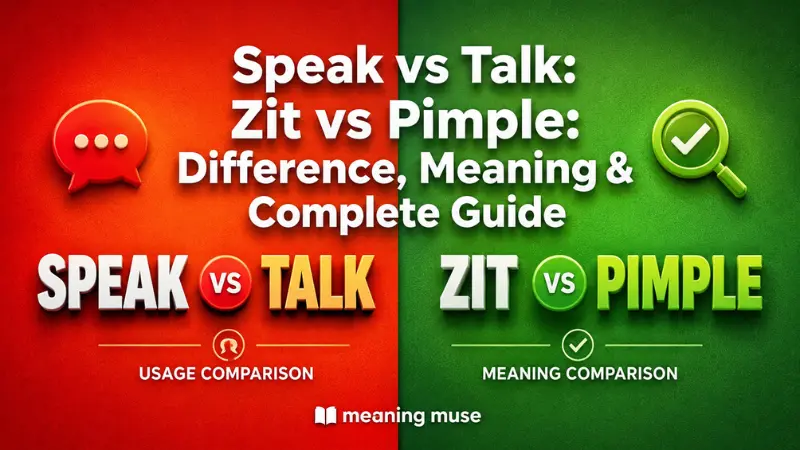
Zit vs pimple is a common question because people often use these two words as if they mean exactly the same thing. In everyday American English, they usually describe the same type of skin problem: a small acne-related bump or blemish.
The main difference is tone and usage.
A zit is a casual, informal word for a pimple. It is commonly used in conversations, especially among teenagers and in everyday speech.
A pimple is a more general and widely accepted term for a small inflamed skin bump caused by clogged pores and acne. It is also the word more often used in health and skincare discussions.
For example:
- I woke up with a huge zit on my forehead.
- I have a painful pimple on my chin.
Both sentences are correct.
Quick Answer
Zit and pimple usually mean the same thing: a small acne-related skin bump.
The difference is:
- Zit = informal, casual word
- Pimple = common, neutral word used in everyday and health contexts
Use zit when talking casually.
Use pimple when writing, explaining skincare, or discussing acne more generally.
Example:
✅ I have a zit before my school photo.
✅ This pimple is causing redness and swelling.
Why People Confuse Them
People confuse zit and pimple because both words describe visible skin bumps caused by acne.
Many people use them interchangeably:
- “I have a zit.”
- “I have a pimple.”
Both statements communicate the same basic idea.
The confusion happens because:
- zit sounds more casual
- pimple sounds more neutral
- medical professionals usually use more specific acne terms instead of either word
Dermatologists may describe acne spots using terms such as papules, pustules, blackheads, whiteheads, nodules, or cysts depending on the type of lesion.
Key Differences Between Zit and Pimple
| Context | Best Choice | Why |
|---|---|---|
| Casual conversation | Zit | Informal everyday word |
| Skincare article | Pimple | Clear and widely understood |
| Talking with friends | Zit | Sounds natural |
| Medical discussion | Pimple | More neutral term |
| School writing | Pimple | More appropriate |
| Describing acne generally | Pimple | Broader accepted term |
Zit vs Pimple Comparison
| Feature | Zit | Pimple |
|---|---|---|
| Meaning | A casual word for a pimple | A small acne-related skin bump |
| Tone | Informal | Neutral |
| Common use | Everyday conversation | General and health discussions |
| Medical term | No | Still a general term, not a specific diagnosis |
| Example | “I got a zit overnight.” | “This pimple is inflamed.” |
Are Zit and Pimple the Same Thing?
Mostly, yes.
A zit is a slang or informal term for a pimple.
A pimple is a general term for a small raised skin lesion, often linked to acne.
In simple words:
All zits are pimples, but the word “zit” is more casual.
However, not every acne-related bump is exactly the same. Acne can include different types of spots, such as:
- blackheads
- whiteheads
- papules
- pustules
- nodules
- cysts
These different types can vary in size, pain, and depth under the skin.
Zit Meaning Explained
What Does Zit Mean?
A zit is an informal word meaning a pimple or acne spot.
It is commonly used when someone talks casually about a breakout.
Examples:
- I have a zit on my nose.
- She tried to hide a zit before the party.
- That zit appeared overnight.
The word is common in everyday speech but is not usually used in formal health writing.
Pimple Meaning Explained
What Does Pimple Mean?
A pimple is a small raised area on the skin, often caused by acne.
A pimple can form when:
- pores become clogged
- oil builds up
- dead skin cells block the pore
- inflammation develops
Examples:
- This pimple hurts when I touch it.
- He uses acne products to treat pimples.
- She gets pimples during stressful periods.
Pimples commonly appear on the:
- face
- forehead
- cheeks
- chin
- chest
- back
Which Word Should You Use?
The best choice depends on your audience.
Use Zit When:
You are speaking casually.
Examples:
- I got a zit before my interview.
- This zit is annoying.
- I need to cover this zit.
The word feels personal and conversational.
Use Pimple When:
You want a neutral or clearer word.
Examples:
- This pimple has been here for three days.
- My skincare routine helps reduce pimples.
- The doctor explained how pimples form.
The word works better for:
- articles
- school writing
- skincare discussions
- health conversations
Medical vs Everyday Usage
Everyday Language
People commonly say:
- zit
- pimple
- breakout
- spot
Example:
“I have a bad zit today.”
This sounds natural.
Health and Skincare Language
Professionals often use more specific terms.
Examples:
- acne lesion
- papule
- pustule
- cyst
A dermatologist may identify the exact type of acne rather than simply calling it a pimple.
Common Mistakes (and Quick Fixes)
Mistake 1: Thinking Zit Is a Medical Term
Incorrect idea:
“Zit is the official medical name.”
Better:
A zit is a casual word for a pimple.
Mistake 2: Thinking They Are Completely Different
Incorrect:
“A zit and a pimple are two separate skin conditions.”
Correct:
They usually refer to the same type of acne spot.
Mistake 3: Using Zit in Formal Writing
Less suitable:
“My patient has a zit.”
Better:
“My patient has a pimple or acne lesion.”
Medical writing usually uses more precise language.
Mistake 4: Calling Every Skin Bump a Pimple
Not every bump is acne.
Some skin bumps may come from other causes, so unusual, painful, or persistent bumps may need professional evaluation.
Everyday Examples
School
Casual:
- I woke up with a zit before picture day.
Neutral:
- I have a pimple on my cheek.
Skincare
Casual:
- This zit appeared overnight.
Professional:
- This pimple is showing signs of inflammation.
Conversation
Friend:
- How do I get rid of this zit?
Health discussion:
- What causes pimples to form?
Social Media
Casual post:
- “Another annoying zit today.”
Educational post:
- “How to reduce pimples naturally.”
Dictionary-Style Word Details
Verb
Zit
Zit is not commonly used as a verb in standard English.
It is mainly a noun.
Example:
- I have a zit.
Pimple
Pimple is also mainly used as a noun.
It is not commonly used as a verb in standard English.
Example:
- She has a painful pimple.
Noun
Zit
A zit is a slang noun meaning a pimple.
Example:
- He covered a zit with makeup.
Pimple
A pimple is a noun describing a small raised skin bump, often related to acne.
Example:
- The pimple became red and swollen.
Synonyms
Zit
Closest alternatives:
- pimple
- spot
- blemish
- breakout
Pimple
Closest alternatives:
- zit
- blemish
- acne spot
- breakout
Example Sentences
Zit
- I noticed a zit on my forehead this morning.
- She used a patch to cover the zit.
- He was worried about a visible zit.
Pimple
- The pimple became smaller after treatment.
- She gets pimples during hormonal changes.
- This pimple is painful.
Word History
The word pimple has been used in English for centuries to describe small skin bumps.
The word zit developed later as an informal slang term for a pimple.
Today, both words are widely understood in American English, but they have different levels of formality.
Phrases Containing
Zit
Common phrases:
- giant zit
- annoying zit
- cover a zit
- pop a zit
Pimple
Common phrases:
- painful pimple
- acne pimple
- pop a pimple
- treat a pimple
- pimple breakout
FAQs
Are zits and pimples the same thing?
Usually, yes. A zit is an informal word for a pimple. Both describe acne-related skin bumps.
Is zit a slang word?
Yes. Zit is a casual slang term commonly used in everyday conversation.
Is pimple a medical term?
Pimple is a common health word, but doctors often use more specific acne terms when describing skin lesions.
Which word should I use in writing: zit or pimple?
Use pimple in formal writing, school work, and skincare explanations. Use zit in casual conversations.
Can a zit become a serious acne problem?
A single zit is usually minor, but severe, painful, or persistent acne may need medical attention.
Why do people get pimples?
Pimples often form when pores become clogged with oil, dead skin cells, and other buildup, leading to inflammation.
Conclusion
The difference between zit vs pimple is mainly about language style, not the skin condition itself.
A zit is a casual word for a pimple.
A pimple is the more neutral and widely accepted term for an acne-related bump.
Remember:
Zit = casual word
Pimple = standard word
For everyday conversations, either word works. For professional, educational, or skincare writing, pimple is usually the better choice.