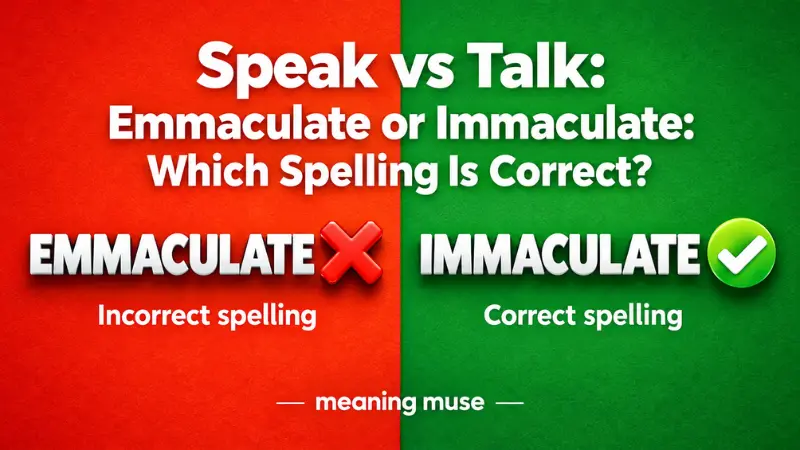
mmaculate is the correct spelling in English. Many people confuse immaculate with emmaculate, but only immaculate is recognized as the standard spelling. The word means perfectly clean, flawless, or free from mistakes.
When choosing between emmaculate or immaculate, remember that the correct form begins with “im” and contains only one m after the first letter. This guide explains why immaculate is correct and how to use it properly in sentences.
Quick Answer
Use immaculate.
The word immaculate is an adjective that means spotless, extremely clean, perfect, or free from faults. Major dictionaries recognize immaculate as the correct spelling.
Emmaculate is not an accepted spelling in standard English.
Why People Confuse Them
The confusion usually happens because the word is pronounced quickly. The beginning sound of immaculate can make writers forget the exact letter pattern.
The correct spelling starts with:
im + maculate = immaculate
A common mistake is adding an extra m after the first letter:
❌ emmaculate
✅ immaculate
Remembering the first two letters, im, can help avoid this error.
Key Differences At A Glance
| Feature | Best Choice | Why |
|---|---|---|
| Standard spelling | Immaculate | It is the accepted English spelling |
| Incorrect form | Emmaculate | It is not a standard spelling |
| Meaning | Immaculate | Means clean, flawless, or perfect |
| Usage | Immaculate | Used in everyday and formal writing |
Quick comparison:
| Feature | Immaculate | Emmaculate |
|---|---|---|
| Correct English word | Yes | No |
| Common dictionary entry | Yes | No |
| Meaning | Spotless or flawless | No standard meaning |
Are They the Same Word?
No.
Immaculate is a real English word.
Emmaculate is not a spelling variant of immaculate. It is simply a misspelling.
The two forms do not represent different meanings, regions, or writing styles.
US vs UK Preference
There is no US versus UK spelling difference for this word.
Both American and British English use:
immaculate
The spelling remains the same across major English varieties.
Which Spelling Should You Use?
Always use immaculate in:
- school writing
- professional documents
- emails
- articles
- everyday communication
Examples:
- The hotel room was immaculate.
- She arrived wearing an immaculate white dress.
- The team delivered an immaculate performance.
When One Spelling Looks Wrong
The spelling emmaculate may look familiar because English contains many words with similar patterns.
However, in this case, replacing im with em creates an incorrect form.
If you see:
❌ The kitchen was emmaculate.
The correction is:
✅ The kitchen was immaculate.
Common Mistakes
Mistake 1: Adding an extra “m”
Wrong:
- emmaculate
Correct:
- immaculate
Mistake 2: Changing “i” to “e”
Wrong:
- emaculate
Correct:
- immaculate
Mistake 3: Using the word without understanding its meaning
Correct use:
- The artist created an immaculate painting.
Incorrect use:
- The painting was immaculate because it was very colorful.
The word focuses on perfection, cleanliness, or being without flaws.
Everyday Examples
- Her apartment was immaculate before the guests arrived.
- The mechanic returned the car in immaculate condition.
- The athlete gave an immaculate performance.
- The report was carefully written and nearly immaculate.
- The garden looked immaculate after months of care.
Dictionary-Style Word Details
Verb
- Immaculate: Not commonly used as a verb in standard English.
- Emmaculate: Not used as a standard English verb.
The word is normally used as an adjective.
Noun
- Immaculate: The noun forms are different related words, such as immaculateness or immaculacy.
- Emmaculate: No standard noun form exists.
Synonyms
For immaculate, closest plain alternatives include:
- spotless
- flawless
- perfect
- clean
- impeccable
For emmaculate, there are no synonyms because it is not a recognized word.
Example Sentences
Immaculate:
- The chef kept the kitchen immaculate throughout the event.
- Her handwriting was neat and almost immaculate.
- The old car remained in immaculate condition.
Emmaculate:
- This spelling should be corrected to immaculate.
Word History
Immaculate comes from Latin roots connected with the idea of being “without a spot” or “unstained.” The spelling developed through earlier forms of English and continues in modern usage.
Phrases Containing
Common phrases with immaculate include:
- immaculate condition
- immaculate appearance
- immaculate performance
- immaculate record
- immaculate home
Emmaculate does not appear in standard phrases.
FAQs
Is emmaculate or immaculate the correct spelling?
The correct spelling is immaculate. The word emmaculate is a common spelling mistake and is not accepted as a standard English word.
What does immaculate mean?
Immaculate means extremely clean, spotless, flawless, or without any mistakes. It can describe a person, place, object, appearance, or performance.
Example:
The hotel room was immaculate.
Why do people spell immaculate as emmaculate?
People often write emmaculate because the pronunciation can make the beginning of the word confusing. The correct spelling starts with “im”, not “em.”
Is emmaculate a real English word?
No. Emmaculate is not a recognized standard English spelling. The correct form is immaculate.
Is immaculate spelled differently in US and UK English?
No. Both American English and British English use the same spelling: immaculate.
What are some synonyms for immaculate?
Common synonyms include:
spotless
flawless
perfect
clean
impeccable
What type of word is immaculate?
Immaculate is an adjective. It describes something that is extremely clean, perfect, or without faults.
Example:
She kept her office immaculate.
How can I remember the correct spelling of immaculate?
A simple trick is to remember:
IM + MACULATE = IMMACULATE
The word begins with “im,” not “em.”
Can I use immaculate in formal writing?
Yes. Immaculate is suitable for formal and everyday writing, including essays, professional documents, articles, and emails.
What is the difference between immaculate and emmaculate?
There is no meaning difference. Immaculate is the correct spelling, while emmaculate is an incorrect spelling.
Conclusion
The correct spelling is immaculate.
Use immaculate when describing something extremely clean, flawless, or without mistakes. Avoid emmaculate because it is not a recognized English spelling.
A simple memory trick:
Immaculate starts with “im,” not “em.”